
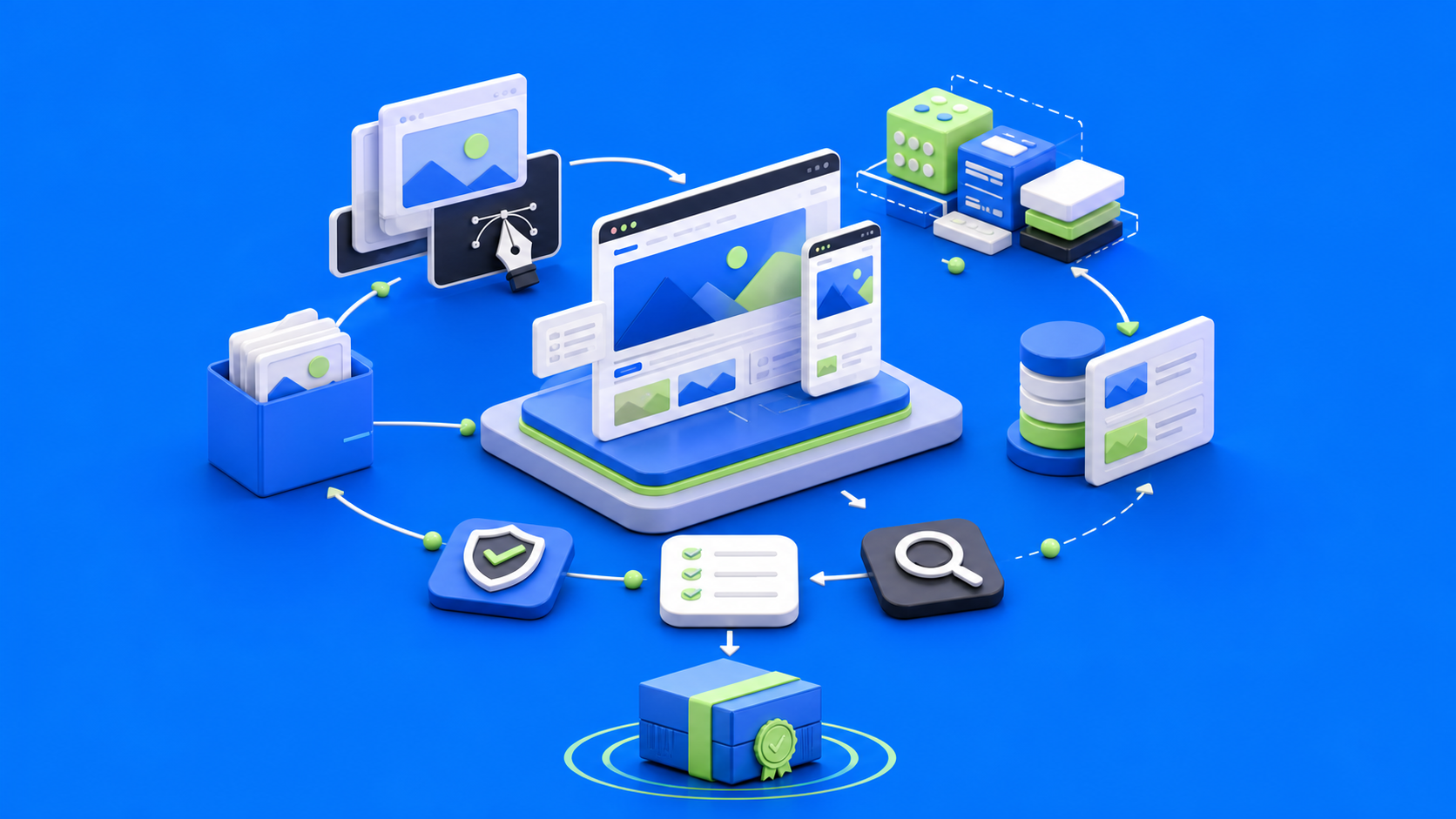
White-label Webflow development is not simply outsourcing production to a quiet vendor. For serious agencies, it is a delivery model that protects the client relationship, preserves the creative direction, and adds senior Webflow capacity exactly where the internal team needs it most.
The agency keeps ownership of strategy, positioning, creative direction, client communication, and final approval. The white-label Webflow partner takes responsibility for the production layer: translating approved designs into a responsive, editable, maintainable Webflow system that can survive launch, handoff, and future content updates.
That distinction matters. A global agency does not usually need someone who can just build pages. It needs a partner who can understand design intent, read the system behind the file, ask useful production questions early, handle CMS architecture, check responsive edge cases, protect performance, and stay invisible when the agency needs a fully white-label workflow.
This guide explains how white-label Webflow development works in practice: when agencies should use it, what a strong partner should own, how communication stays clean, how QA should be structured, and what makes the difference between basic outsourced Webflow work and senior production support.
What white-label Webflow development actually means
In a white-label model, a specialist Webflow production team works behind the agency brand. The client experiences the agency as the main delivery partner. The agency can present the build as part of its own service offering, while the production partner supports the work quietly in the background.
This model is useful when the agency already owns the client relationship but needs stronger or faster Webflow execution. That might happen because the internal team is fully booked, the project requires deeper Webflow experience, the timeline is too tight for hiring, or the client expects a polished build that marketing can manage after launch.
White-label does not mean low involvement. The best version of this model is collaborative. The Webflow partner should understand the brief, review the design system, map the CMS, identify risks, build cleanly, document decisions, and communicate in a way that helps the agency stay confident with the client.
For devthinX, white-label Webflow development means becoming the production layer behind design-led agencies. The goal is not to replace the agency's voice. The goal is to make the agency's delivery stronger.
When agencies should consider a white-label Webflow partner
Agencies usually bring in white-label Webflow support for one of four reasons: capacity, specialization, speed, or quality control.
Capacity is the most obvious. A team may have enough design and account leadership, but not enough senior Webflow production time to handle every approved project. Hiring permanently may be too slow or unnecessary, especially if demand comes in waves.
Specialization is just as important. Webflow looks simple when the page is small. It becomes more complex when the site includes CMS-heavy templates, advanced responsive behavior, localization, performance concerns, reusable components, multiple stakeholders, and a handoff to non-technical editors.
Speed matters when the launch date is real. A partner that already has a clear production process can compress delivery without turning the project into a rushed mess.
Quality control matters when the agency's reputation is on the line. A beautiful design loses value if the Webflow build feels fragile, slow, hard to edit, or inconsistent across breakpoints.
White-label partnership matrix
Agency situationBest-fit modelWhat devthinX ownsWhat the agency keeps
What a senior Webflow production partner should own
A strong white-label Webflow partner should own more than implementation. The job is to protect the production outcome.
That starts with a design audit. Before build starts, the partner should review the approved Figma file or design source and identify repeated components, missing responsive states, CMS-driven sections, asset risks, interaction complexity, and possible launch blockers. The goal is to find ambiguity early, while it is still cheap to solve.
Next comes build logic. A professional Webflow site is not a pile of recreated frames. It is a system of sections, classes, components, CMS fields, dynamic templates, responsive rules, and reusable patterns. The production partner should decide how to make the site clean to build, easy to QA, and practical for future updates.
CMS architecture is a major part of that work. Blog posts, case studies, services, industries, resource hubs, team profiles, and landing pages all need different field structures. The wrong CMS structure can make a good-looking site painful for the client to maintain. The right structure makes publishing faster and reduces the chance that editors break the design later.
Responsive QA should also be owned by the production partner. Agencies should not have to discover late that a section collapses poorly on tablet, a card title overflows on mobile, or an image crop hides the subject. A white-label partner should test the build across practical breakpoints and flag trade-offs clearly.
Where the agency should keep control
White-label production works best when responsibilities are clear. The agency should keep ownership of the areas that define the client relationship: strategy, positioning, messaging, creative direction, approvals, and stakeholder management.
This is especially important for larger agencies. Clients often choose an agency because they trust its strategic judgment and taste. A Webflow production partner should support that trust, not interrupt it.
The agency should also remain the final decision-maker when trade-offs appear. For example, if a hero interaction is visually impressive but risky for mobile performance, the production partner should explain the options. The agency decides what is acceptable for the client, the brand, and the launch date.
The cleanest model is simple: devthinX provides senior production judgment, technical recommendations, implementation, QA, and handoff support. The agency controls client-facing direction and final approval.
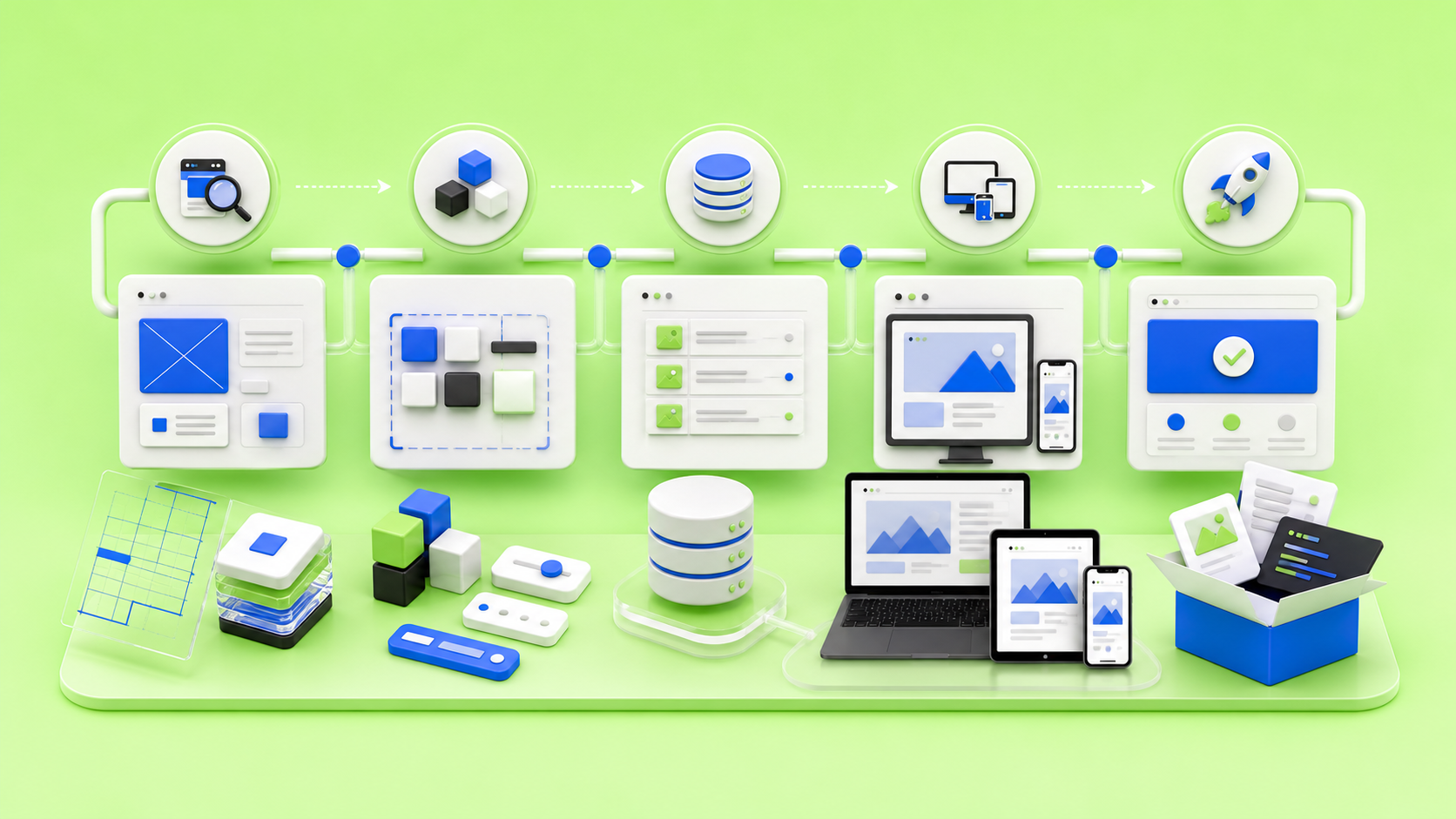
The white-label workflow from file to launch
A professional white-label Webflow workflow should be predictable. The agency should know what happens next, what information is needed, what decisions are open, and where the build stands.
The exact process depends on the project, but most agency builds follow a similar rhythm.
First, the agency shares the design file, sitemap, scope, client requirements, deadline, brand assets, and any technical notes. If the project includes existing Webflow work, the partner also reviews the current site structure.
Second, the partner audits the file and returns production questions. This is where many problems can be prevented. Are all breakpoints designed? Which sections are CMS-driven? Which images need specific ratios? Are interactions essential or decorative? Are there localization, SEO, cookie, analytics, or form requirements?
Third, the team agrees on scope. This should include pages, CMS collections, reusable components, responsive expectations, forms, integrations, animation complexity, content-entry responsibility, QA rounds, and launch support.
Fourth, production starts. The build should happen in a structured order: foundations first, repeated components next, CMS architecture early, pages after the system is stable, and QA throughout rather than only at the end.
Fifth, the partner runs production QA and prepares handoff notes. The agency reviews the site, consolidates feedback, and decides what goes to the client.
Agency workflow matrix
StageMain activityKey outputRisk reduced
How to prepare a Figma file for white-label Webflow production
A white-label partner can work with imperfect files, but a cleaner file produces a cleaner build. Agencies can save time by preparing the file around production reality, not only visual presentation.
The most useful preparation is clarity. Final screens should be separated from exploration. Components should be named or grouped logically. Desktop, tablet, and mobile states should be visible when they matter. Repeated sections should be easy to identify. Content variations should be included for cards, listings, and CMS templates.
It also helps when the agency marks what is fixed and what can be interpreted. Some designs need pixel-level fidelity. Others allow production judgment as long as the hierarchy and brand feel remain intact. A good partner can work either way, but ambiguity should be intentional.
A practical file handoff checklist
CMS architecture is where white-label quality becomes visible
Clients often judge a Webflow build after launch, when they start editing. If the CMS is confusing, the site feels unfinished even if the first launch looked good.
For agency work, CMS structure should be planned around editorial workflows. A blog needs titles, excerpts, SEO fields, cover images, author data, read time, body content, FAQ fields, and related links. Case studies may need client names, industries, services, result metrics, gallery images, testimonial quotes, project dates, and featured status. Service pages may need repeatable modules, proof sections, pricing signals, and conversion copy.
The production partner should help decide which content belongs in CMS fields, which content belongs in the template, and which content should remain custom per page. Too much flexibility creates messy editing. Too little flexibility forces the client back to the agency for small updates.
A good CMS gives editors freedom inside boundaries. It lets the client publish confidently while the design system keeps the output consistent.
Why components matter for agency-scale delivery
Large agencies care about repeatability because one project is rarely just one page. A client may need landing pages, campaign pages, blog templates, case study templates, event pages, industry pages, and future content extensions. Rebuilding the same patterns again and again wastes time and increases inconsistency.
Components help turn repeated layouts into reusable structures. Webflow University has useful official material on this topic, including lessons on components and design systems. Those ideas are directly relevant to white-label production because reusable structure makes the agency's future work easier, not just the initial build faster.
Webflow University's design systems lesson is a helpful reference for teams that want scalable production patterns, reusable components, variables, and templates.
For white-label work, components should not be created mechanically. They should map to real project needs. A navigation system, CTA band, testimonial block, logo strip, card grid, resource card, and FAQ item may all deserve reusable treatment. A one-off editorial section may not.
The partner's responsibility is to build the right amount of system. Too little structure creates future maintenance problems. Too much structure makes the project slower and harder to edit. Senior Webflow production sits between those two risks.
How communication stays clean in a white-label workflow
Communication is where many white-label relationships succeed or fail. The production partner must be responsive and specific, but not chaotic. The agency needs enough detail to lead the client confidently without being pulled into every tiny production decision.
A strong communication rhythm usually includes a kickoff summary, scoped assumptions, production questions, milestone updates, QA notes, and launch handoff. The best updates are short but useful: what was completed, what is blocked, what decision is needed, and what happens next.
For fully white-label projects, the partner should not contact the client directly unless the agency requests it. If client-facing participation is needed, it should be clearly agreed in advance. Some agencies prefer invisible production support. Others want the partner to join technical calls as part of the agency team. Both models can work if expectations are clear.
Useful communication rules
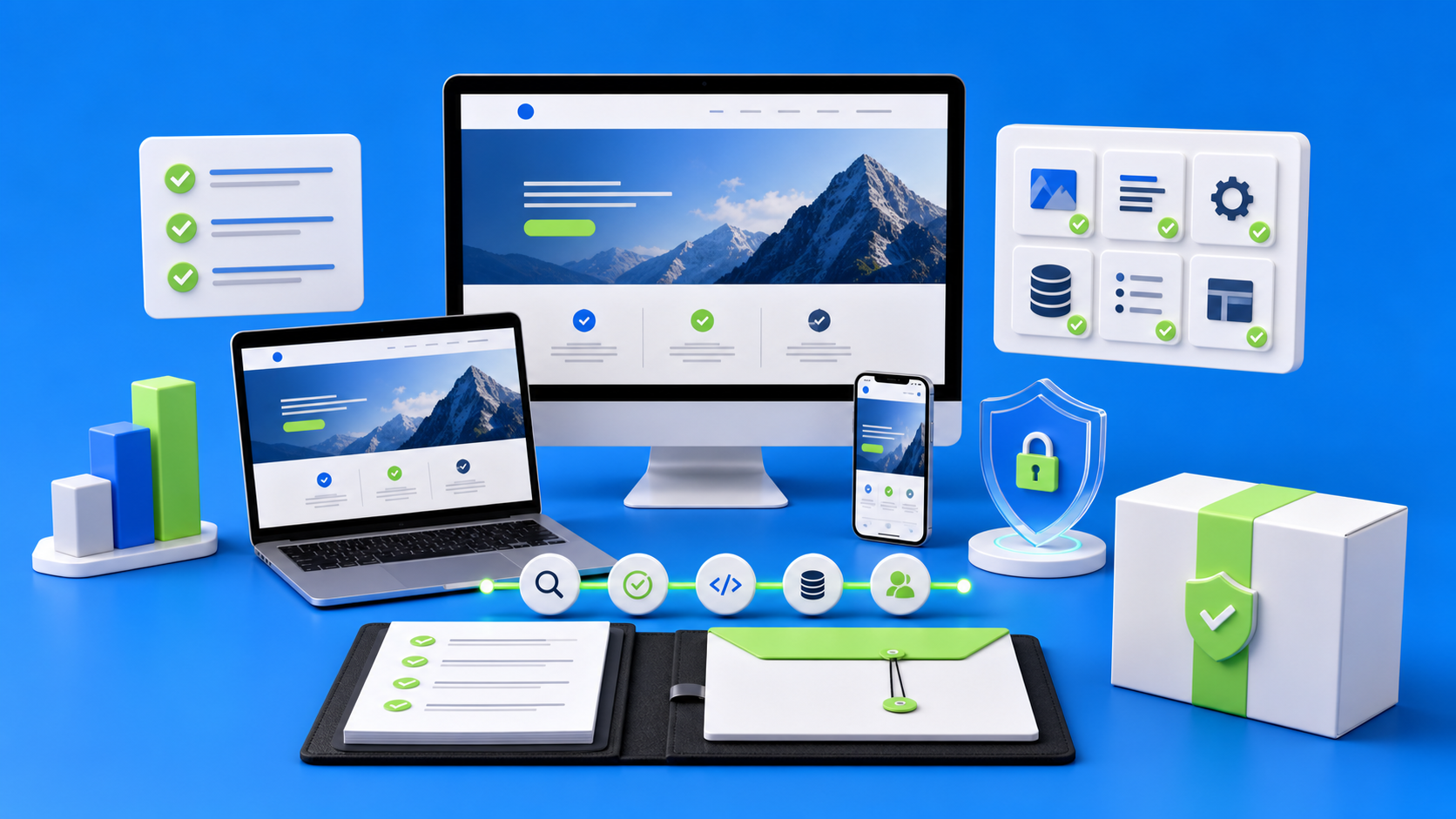
QA is not a final task. It is a production discipline.
White-label Webflow development should include QA throughout the project. If QA only starts at the end, the team discovers issues when everyone is already tired and the deadline is close.
Professional QA covers more than visual matching. It should check responsive behavior, browser behavior, CMS content, forms, links, SEO metadata, accessibility basics, image quality, performance, animations, and handoff readiness.
For agencies, QA is also reputational protection. The client may never know a white-label partner was involved, but they will notice if the site breaks on mobile, loads slowly, or becomes hard to edit. The invisible production layer still becomes visible through quality.
Quality ownership matrix
AreaWhat devthinX checksWhy agencies care
Performance and accessibility should be considered early
Performance is not a plugin to install near launch. It is shaped by image decisions, layout complexity, animation choices, custom scripts, CMS logic, and responsive rules. If those decisions are made without production awareness, optimization becomes harder later.
Accessibility works the same way. Heading hierarchy, button labels, contrast, alt text, focus states, form labels, and semantic structure are easier to handle during build than after launch. A white-label partner does not need to turn every agency project into an enterprise accessibility engagement, but the basics should not be ignored.
For global agencies, this matters because clients often have internal standards. Even when the first scope is a marketing site, stakeholders may ask about performance scores, SEO readiness, accessibility, governance, privacy tools, and content ownership. A senior production partner should be comfortable discussing those areas calmly and practically.
Pricing signals: what affects effort in white-label Webflow work
White-label Webflow work should be scoped around complexity, not only page count. A five-page site can be more complex than a twenty-page site if it includes unusual interactions, heavy CMS logic, complex responsive behavior, localization, gated content, or many stakeholder-driven exceptions.
The largest pricing signals are usually design complexity, CMS depth, responsive ambiguity, animation requirements, migration needs, third-party integrations, QA expectations, and launch support. The cleaner those inputs are, the easier it is to estimate accurately.
Agencies should be careful with partners who price only by page count without asking production questions. That can work for simple sites, but it becomes risky when the project has CMS templates, custom interactions, or strict quality expectations.
A better estimate explains assumptions. It should say what is included, what is excluded, what could change the scope, and what the agency needs to provide for the timeline to hold.
Common risks and how to prevent them
The first common risk is unclear authority. If the agency, client, designer, copywriter, and production partner all make decisions independently, the build will slow down. The agency should remain the decision hub.
The second risk is late content. Webflow CMS templates can be built with sample content, but real content always reveals edge cases: long titles, missing images, short descriptions, unusual categories, or image crops that do not match the design. Content should be tested before launch week.
The third risk is treating responsive work as automatic. Webflow gives strong visual control, but responsive design still requires decisions. Sections need rules. Cards need wrapping behavior. Images need crop logic. Typography needs practical sizing. Complex desktop concepts often need simplified mobile behavior.
The fourth risk is overbuilding. Not every section needs a complex component. Not every animation needs to survive mobile. Not every CMS field needs to be editable. A strong production partner helps simplify the right things without weakening the brand experience.
How devthinX fits into an agency delivery model
devthinX is best suited for agencies that already have design direction and need senior Webflow production support. That can mean taking an approved Figma file into Webflow, stabilizing an existing build, planning CMS architecture, creating reusable components, improving responsive behavior, supporting launch QA, or helping the agency maintain Webflow work after delivery.
The partnership can stay fully white-label. devthinX can work behind the agency, keep documentation clear, and support the internal team without stepping into the client relationship. When the agency wants technical support on a client call, that can also be handled as an agreed role.
The practical promise is simple: the agency gets a calmer production layer. Designs are reviewed before build. Questions are raised early. CMS structure is planned. Responsive QA is treated seriously. Handoff is considered before launch. The client receives a Webflow site that feels polished and manageable.
Final thought
White-label Webflow development works when it protects both sides of the project: the agency's relationship with the client and the client's experience after launch. It should make delivery cleaner, not more complicated.
For large agencies, the best white-label partner is not just a hidden developer. It is a senior production collaborator who understands agency pressure, respects the brand direction, keeps communication clear, and builds Webflow systems that stay useful after the first launch.
If your agency has an approved design, a busy pipeline, or a Webflow project that needs stronger production ownership, devthinX can review the file, map the build logic, and support the delivery quietly under your agency workflow.
Questions before you build
White-label Webflow development is a production model where a specialist Webflow partner builds behind the agency brand while the agency keeps the client relationship, strategy, creative direction, and approvals.
Only if the agency wants that. devthinX can stay fully behind the scenes, support internal delivery, or join selected technical conversations under an agreed agency-facing role.
It is useful when the agency has approved designs but needs senior Webflow capacity, CMS architecture, responsive QA, launch support, or reliable overflow production without hiring in-house.
The strongest inputs are an approved design file, sitemap, scope notes, CMS requirements, brand assets, integration needs, animation expectations, content responsibility, and launch timeline.
Quality is controlled through early design audit, structured build logic, CMS testing, responsive QA, form and link checks, SEO basics, performance review, and clear handoff notes before launch.
Yes. devthinX can support post-launch improvements, new CMS templates, landing pages, responsive fixes, performance cleanup, and ongoing Webflow production for agency pipelines.
.avif)